


ARTIFICIAL INTELLIGENCE: THE END OF CODING: WHY CODING & PROGRAMMING IS A RELIC OF THE PAST IN 2026

Curated by Artificial Intelligence
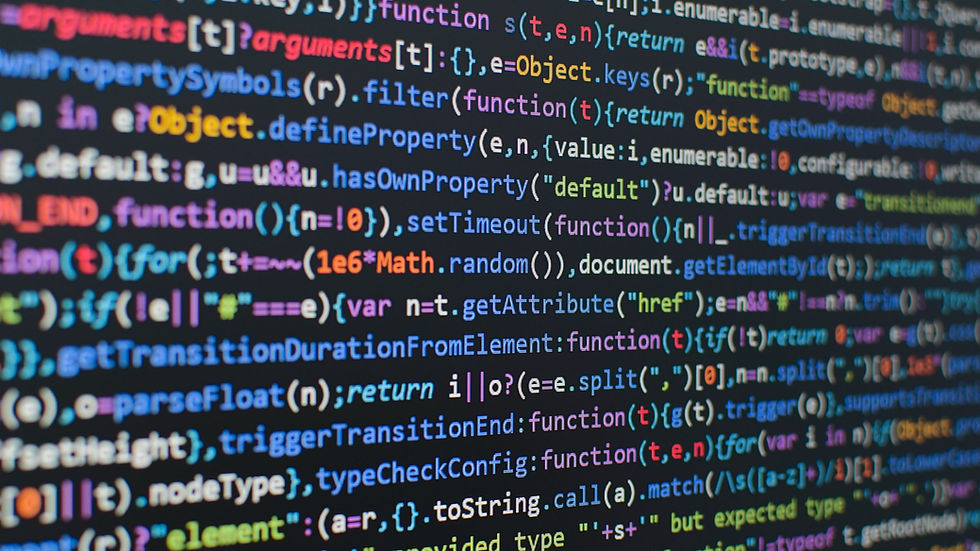
[Artificial Intelligence coding programing] The year 2026 marks a pivotal moment in the history of technology, as the traditional act of computer coding, once the bedrock of the digital age, rapidly recedes into obsolescence. Driven by the relentless advance of Artificial Intelligence (AI) and the burgeoning era of "natural language programming," the software development landscape is undergoing a profound transformation, leading to significant job losses in conventional coding roles and a fundamental redefinition of what it means to be a programmer.
THE GREAT AI REALIGNMENT: FROM SYNTAX TO SEMANTICS
For decades, coding was synonymous with mastering complex syntax and intricate logic. Today, that paradigm is shifting dramatically. As early as 2025, industry luminaries like Geoffrey Hinton, the "Godfather of AI," predicted that AI would not only improve but also gain the ability to "replace many other jobs" by 2026. This prediction is now a stark reality for many in the software development sector.
The core of this revolution lies in the rise of "Natural Language Programming" (NLP). AI agents are increasingly capable of generating, debugging, and optimizing code from plain English instructions. As Waleed Kadous, a prominent voice in AI, succinctly puts it, "Natural language has become the new high-level programming language". This means the focus for developers is moving away from manual line-by-line coding to "AI Orchestration" and "System Architecture" – instructing AI models and designing complex systems rather than writing the code themselves.
THE 2026 TECH LAYOFFS: A CONSEQUENCE OF AUTOMATION
The impact of this shift is not merely theoretical; it is manifesting in widespread job losses across the tech industry. In 2025, nearly 245,000 tech jobs were cut globally, with approximately 55,000 of those U.S. layoffs directly attributed to AI automation. The trend is accelerating into 2026.
Surveys indicate that 55% of U.S. hiring managers anticipate further layoffs in 2026, with a significant 44% identifying AI as the primary driver. Major tech giants are already restructuring their workforce:
Amazon is cutting 16,000 corporate employees, following 14,000 reductions in late 2025.
Meta is reducing its Reality Labs division by 10% (1,500 employees) to redirect investments towards AI research.
Pinterest is cutting 15% of its workforce (700 positions) to prioritize AI-focused roles.
Dow is implementing a 13% workforce reduction (4,500 employees), citing AI and automation as key factors in simplifying operations.
These figures underscore a fundamental realignment rather than a mere economic downturn. Companies are not just cutting costs; they are strategically reallocating resources from traditional coding functions to AI development and integration.
THE DEMISE OF THE JUNIOR DEVELOPER AND THE RISE OF THE AI ARCHITECT
Perhaps the most vulnerable segment of the coding workforce is the entry-level or junior developer. AI tools can now perform many of the tasks traditionally assigned to new programmers, such as writing boilerplate code, basic debugging, and routine feature implementation, with greater speed and accuracy. This leaves a shrinking entry point for aspiring coders who lack advanced skills in AI or specialized domains.
Conversely, roles focused on "AI Software Engineering" and "Machine Learning" are experiencing massive demand and rising compensation [5]. The future programmer will be less of a coder and more of an architect, a prompt engineer, or a system designer who understands how to leverage AI tools to build complex solutions. The U.S. Bureau of Labor Statistics still projects a 15% growth in "software developer" jobs through 2032, but it is crucial to understand that these roles will be fundamentally different, heavily augmented by AI.
CONCLUSION: ADAPT OR BE LEFT BEHIND
The narrative that "coding is a thing of the past" is not about the disappearance of software, but the evolution of its creation. The year 2026 serves as a stark reminder that the digital revolution continues to accelerate, demanding a new set of skills and a proactive approach to career development. For those in the tech industry, the message is clear: embrace AI, adapt to natural language programming, and evolve into roles that orchestrate intelligence, or risk being left behind in the wake of this transformative technological wave.


Totally agree that AI is changing everything. Even describing images is now super easy with an image describer that generates alt text in seconds. So cool!
Wow, this article really makes you think about how AI is changing everything. I've been looking into how AI can also help with upscale video online to fix old clips, and it's amazing how far technology has come.